
Quick Facts
- The flywheel device provides cardiovascular and resistance training up to 400 pounds in a space the size of a large shoebox
- Artemis II astronauts used the device successfully during their historic 9-day lunar mission that ended April 10, 2026
- The technology could lead to compact exercise equipment for offices, homes, and medical rehabilitation centers
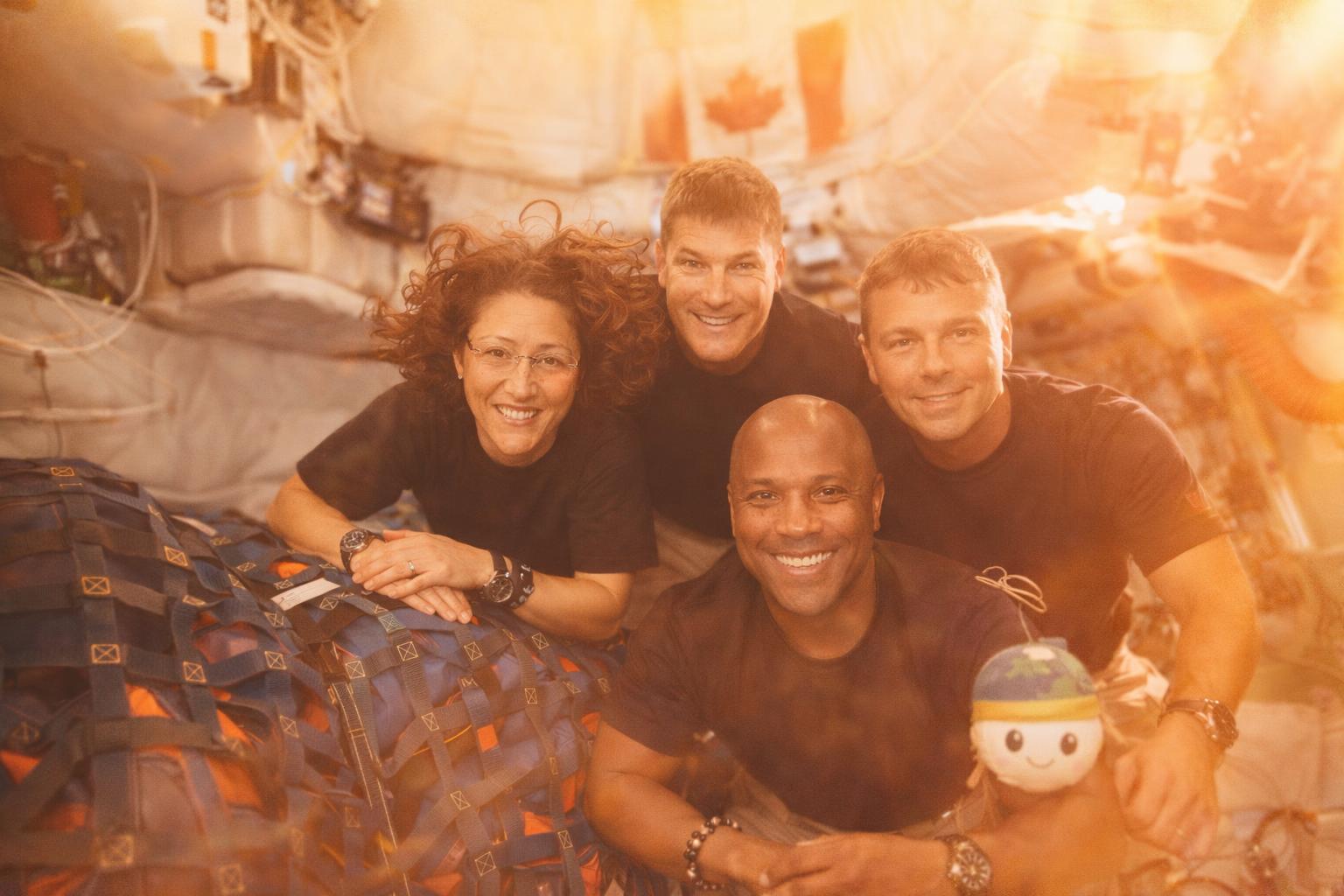
The four astronauts who just returned from humanity’s first lunar mission in 54 years brought back more than moon photos. They tested a revolutionary exercise device that could transform how busy professionals stay fit on Earth.
The Artemis II crew used a compact flywheel system during their nine-day mission to combat the rapid muscle and bone loss that occurs in zero gravity. The device delivers both cardiovascular workouts and resistance training up to 400 pounds while fitting in a space smaller than most desk drawers.
‘It is a really good piece of gear and we can actually get a nice workout,’ said astronaut Reid Wiseman after testing the flywheel aboard the cramped Orion spacecraft, which has just 316 cubic feet of living space.
The flywheel works like a yo-yo, providing resistance equal to the force astronauts apply. Canadian astronaut Jeremy Hansen demonstrated rowing motions ‘like a cardiovascular workout where you row at a lower resistance and a fast pace.’ Astronauts also performed squats, deadlifts and curls using the single device.
Exercise physiologist Jessica Scott at Memorial Sloan Kettering Cancer Center helped develop the technology over several years. She envisions widespread applications beyond space travel.
‘One day we could all be having our own flywheel,’ Scott said, describing devices ‘small enough to fit under a desk at work, or in the corner of an office.’
The health implications extend far beyond convenience. Even short periods without gravity cause significant muscle and bone deterioration. This mirrors challenges faced by people with cancer, sedentary workers, and aging adults.
‘You start childhood and then as you grow your bone density and mass reach a peak in your late twenties or early thirties,’ said radiologist Thomas Lang, who studies bone and muscle loss for NASA. For women, bone loss accelerates sharply during menopause. ‘That’s a big whopping decline.’
The Artemis II mission achieved multiple records, reaching 252,756 miles from Earth – farther than any human had traveled since Apollo 13 in 1970. The crew of Christina Koch, Jeremy Hansen, Victor Glover, and Reid Wiseman splashed down safely off San Diego on April 10.
Unlike the International Space Station, which houses full exercise suites, the Orion spacecraft required an ultra-compact solution. The flywheel’s success during the mission provides crucial data for longer lunar missions and potential Mars expeditions.
Scott’s research bridges space medicine and cancer care, noting that astronauts experience symptoms similar to cancer patients, including muscle changes and cognitive effects – ‘space fog’ comparable to ‘chemo brain.’
The technology has not yet been tested for longer durations, but Scott remains optimistic about its potential for extended space missions and Earth-based applications. The device could particularly benefit remote workers, travelers, and anyone with limited space for traditional exercise equipment.
Read more: We can’t all be astronauts, but the Artemis II crew has fitness lessons for everyone