
Quick Facts
- Bulgarian split squats activate 85% of total force through the front leg, significantly more than bilateral squats
- EMG research shows 47% greater gluteus medius activation compared to standard squats
- Studies find suspension-based versions increase erector spinae activation while trunk flexion boosts glute and hamstring engagement
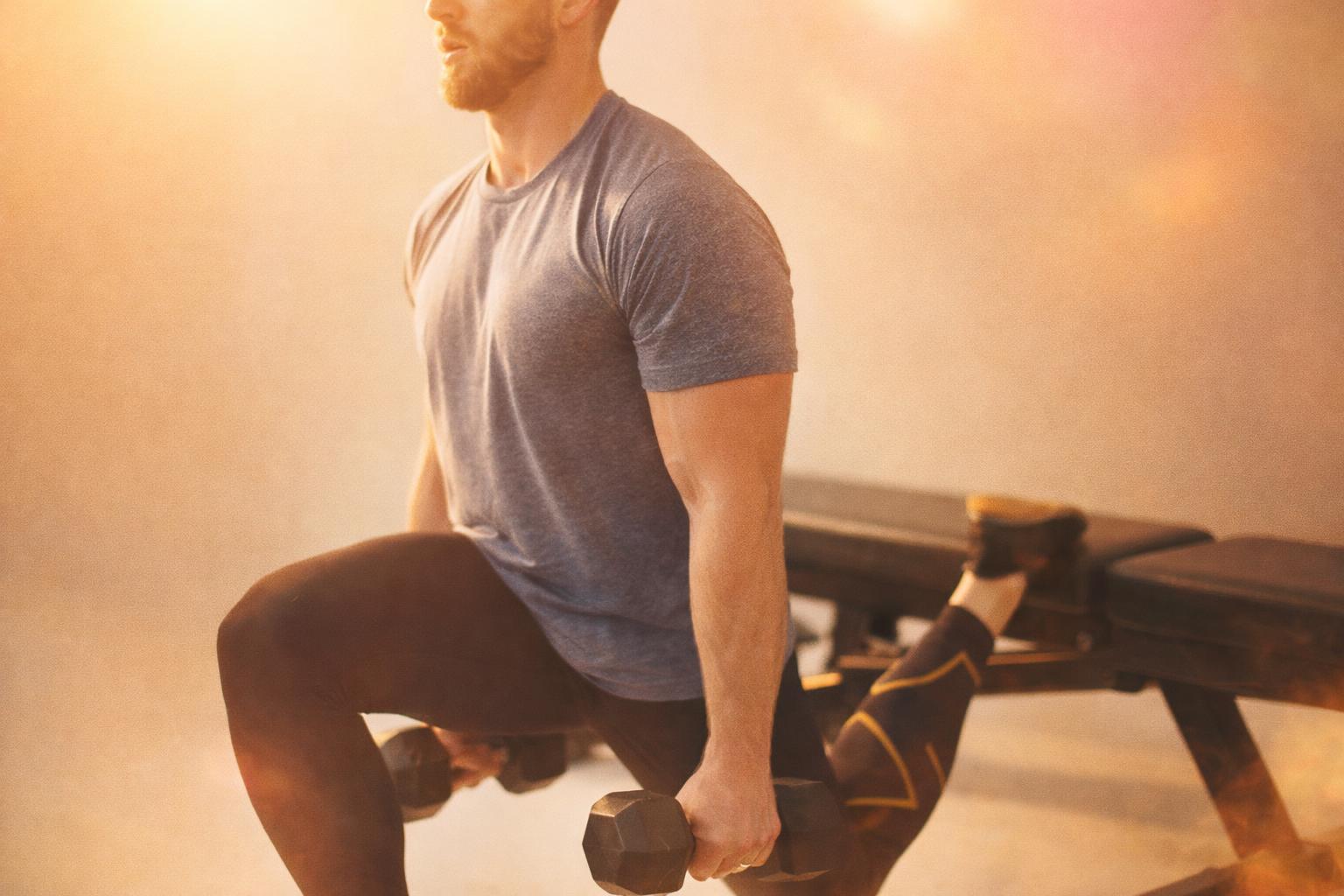
Bulgarian split squats deliver superior leg muscle growth compared to traditional squats, according to new research published in BMC Sports Science, Medicine and Rehabilitation.
The 2025 study used electromyography to measure muscle activation across eight different muscles during various Bulgarian split squat positions. Researchers found that suspension-based versions produced significantly greater activation of the erector spinae muscles. When performed with trunk flexion, the exercise increased activation in the gluteus maximus, biceps femoris, and rectus femoris muscles.
EMG sensors revealed Bulgarian split squats generate very high quadriceps activation and notable gluteus medius activation at around 47% of maximum voluntary contraction. This exceeds the muscle activation seen in standard bilateral squats.
“The Bulgarian split squat is one of the most effective single-leg movements you can do because it targets multiple major muscle groups at once,” says James Bickerstaff, a certified personal trainer at OriGym. “Hitting areas like the hamstrings and core for stability, as well as the quads and glutes.”
Research shows 70-85% of total force comes through the front leg during Bulgarian split squats, depending on platform height and load. This unilateral loading pattern helps correct muscle imbalances that bilateral exercises cannot address.
“Unilateral exercises like the Bulgarian Split Squat are crucial for identifying and correcting asymmetries that may not be apparent during bilateral training,” says Michael Boyle, a strength and conditioning specialist.
The exercise promotes greater recruitment of the gluteus maximus than back squats and shows higher EMG activity for hamstrings relative to quadriceps muscles. Studies also found Bulgarian split squats involve significantly less knee joint displacement, making them potentially better for people with knee issues.
For maximum muscle growth, experts recommend using a 3-1-1-0 tempo: three seconds down, one-second pause at the bottom, one second up, and no pause at the top. Programming should include 3-4 sets of 8-12 reps per leg with moderate weight for hypertrophy.
“The traditional squat is a more quad-based movement,” says Teddy Savage, lead personal trainer at Planet Fitness. “With Bulgarian Split Squats, the flexion and extension of the hips throughout the motion really activate the glute and hamstring muscles together, providing a deeper range of motion.”
A separate 2024 study in the Journal of Strength and Conditioning Research analyzed the load-velocity relationship in Bulgarian split squats among 21 strength-trained men, further validating the exercise’s effectiveness for muscle development.
The research shows two main variations exist based on foot position. Placing the front foot farther from the elevated surface emphasizes glutes and hamstrings, while positioning it closer targets the quadriceps more directly.
Read more: How to Master the Bulgarian Split Squat to Grow Your Leg Muscles