
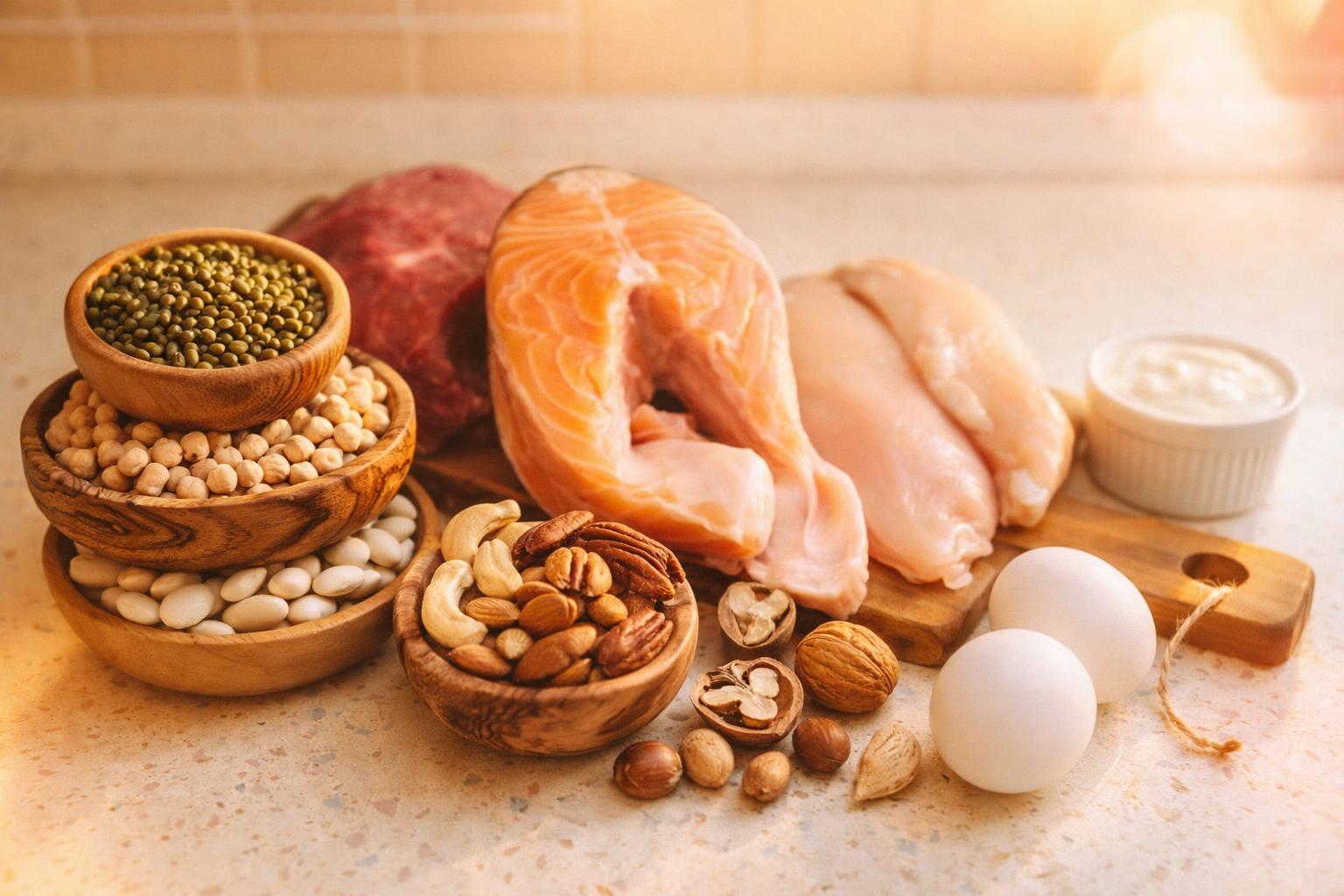
Quick Facts
- New federal guidelines recommend 1.2-1.6 grams of protein per kilogram of body weight daily, up from 0.8 grams
- A 150-pound person now needs 82-109 grams of protein daily under the updated recommendations
- People lose 3-8% of muscle mass per decade starting in their 30s and 40s
The federal government updated dietary guidelines in January 2026 to recommend significantly higher daily protein intake than previous standards. The new guidelines call for 1.2 to 1.6 grams of protein per kilogram of body weight each day, replacing the traditional recommendation of 0.8 grams per kilogram.
Health Secretary Robert F. Kennedy Jr. called the changes “the most significant reset of federal nutrition policy in history.” Kennedy said during a White House briefing: “Protein and healthy fats are essential and were wrongly discouraged in prior dietary guidelines.”
The updated recommendations follow scientific evidence showing protein’s critical role in muscle preservation. “Protein is the building block of skeletal muscle,” says Rachele Pojednic, a Stanford University scientist. “As you intake these amino acids, they are broken down in your GI tract and absorbed and then reassembled into every tissue.”
To calculate your new protein target, divide your weight in pounds by 2.2 to convert to kilograms, then multiply by 1.2 to 1.6. A 150-pound person would need 82 to 109 grams of protein daily under the new guidelines.
The changes address age-related muscle loss that begins in the 30s and 40s. People lose 3 to 8 percent of muscle mass per decade starting around age 30, though the effects typically become noticeable in the 50s or 60s.
Exercise increases protein needs further. “Activity is one of the key drivers of how much protein you need,” says Stuart Phillips, a McMaster University researcher who studies skeletal muscle health. Exercise “sensitizes” muscles to protein, enhancing their ability to use amino acids for growth and repair.
Recent research supports the higher protein targets. A 12-week exercise study found that protein intake improvements reduced biological aging markers by the equivalent of 10 months. The study tracked 204 proteins and found some, like CLEC14A, changed with exercise and linked to improved insulin sensitivity.
The American Medical Association endorsed the changes. “The guidelines affirm that food is medicine and offer clear direction patients and physicians can use to improve health,” said Dr. Bobby Mukkamala, the AMA president.
However, some nutrition experts expressed concerns. Christopher Gardner, a Stanford nutrition expert, criticized featuring red meat prominently in the new food pyramid. “It does go against decades and decades of evidence and research,” he said.
Marie-Pierre St-Onge from Columbia University noted that “Americans are consuming protein in amounts well above the amount that is necessary to sustain health and development.”
The guidelines update every five years and impact federal nutrition policy, including school lunches and military meals. Food companies have responded by reformulating products, with PepsiCo and J.M. Smucker announcing plans to phase out synthetic dyes and artificial ingredients.
Read more: How much protein do you need? Here’s how to personalize your optimal intake